
Cardiovascular fitness is often associated with activities like running, cycling, swimming, or rowing. These traditional forms of exercise are well-known for increasing heart rate, improving endurance, and supporting long-term heart health. However, in recent years, suspension training has become increasingly popular as a versatile workout method that develops strength, balance, flexibility, and core stability. This has led many people to ask an important question: can suspension training improve cardio fitness?
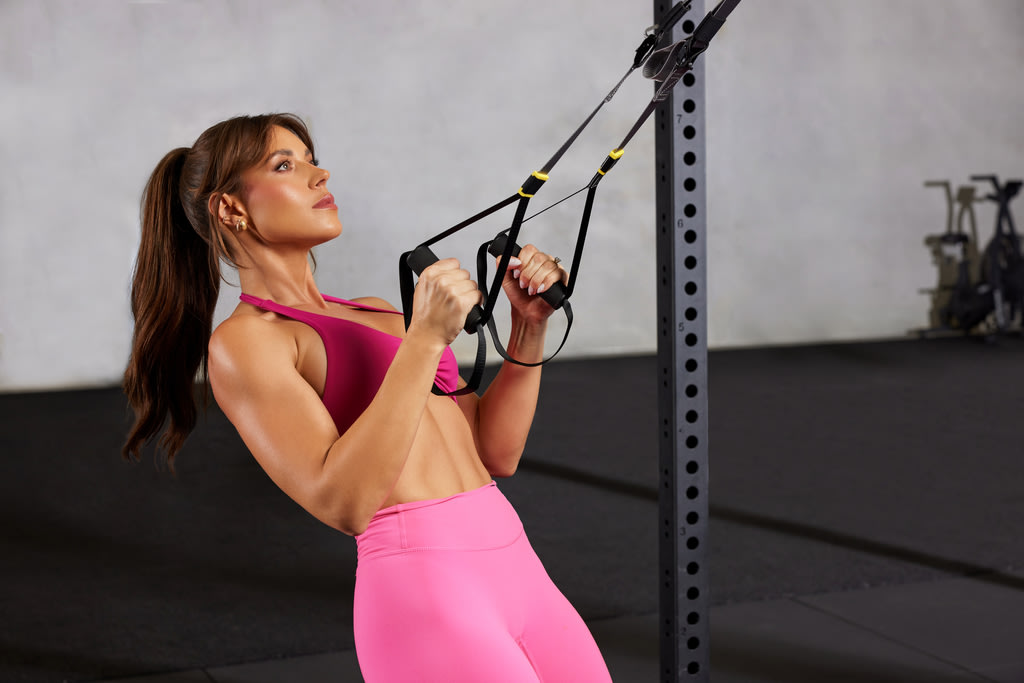 The answer is yes. While suspension training is commonly viewed as a strength-building workout, it can also deliver impressive cardiovascular benefits when performed with the right intensity and structure. By combining full-body movements with minimal rest between exercises, suspension training can elevate your heart rate, challenge your endurance, and provide an effective cardio workout without requiring traditional cardio equipment.
Whether your goal is to lose weight, improve athletic performance, or simply stay active, understanding how suspension training affects your cardiovascular system can help you make the most of your workouts.
What Is Suspension Training?
Suspension training is a form of resistance exercise that uses adjustable straps anchored to a secure point. Instead of relying on machines or heavy weights, you use your own body weight as resistance while performing a variety of exercises.
The unstable nature of the straps forces multiple muscle groups to work together throughout every movement. This not only develops strength but also improves balance, coordination, mobility, and core engagement.
One of the biggest advantages of suspension training is its adaptability. Beginners can reduce the difficulty by changing their body angle, while experienced athletes can make exercises significantly more challenging without changing equipment.
Because nearly every exercise recruits several muscles simultaneously, suspension training naturally requires more energy than many isolated strength exercises.
Understanding Cardio Fitness
Before answering the question, can suspension training improve cardio fitness, it's important to understand what cardiovascular fitness actually means.
Cardio fitness refers to your body's ability to supply oxygen to working muscles during sustained physical activity. A strong cardiovascular system allows your heart and lungs to deliver oxygen efficiently, helping you exercise longer without becoming fatigued.
Improving cardio fitness typically results in:
- Better endurance
- Lower resting heart rate
- Improved circulation
- Enhanced athletic performance
- Increased calorie burning
- Reduced risk of heart disease
Although running remains one of the most common ways to improve cardiovascular endurance, it's certainly not the only option.
How Suspension Training Raises Your Heart Rate
One reason people ask can suspension training improve cardio fitness is because suspension workouts often feel surprisingly demanding.
Unlike traditional weightlifting, suspension exercises engage multiple muscle groups simultaneously. Movements such as suspended mountain climbers, squat jumps, burpees, push-ups, and rows require your legs, arms, shoulders, back, and core to work together.
As more muscles become active, your body demands additional oxygen. To meet this demand, your heart pumps faster, increasing your heart rate much like a conventional cardio workout.
The less rest you take between exercises, the longer your heart rate remains elevated.
Full-Body Workouts Increase Cardiovascular Demand
Traditional strength training often isolates one muscle group at a time.
Suspension training rarely works this way.
Instead, exercises usually involve the upper body, lower body, and core simultaneously. For example, a suspended lunge challenges your legs while your abdominal muscles stabilize your torso and your upper body maintains balance.
 This full-body engagement increases overall energy expenditure.
When several large muscle groups work together continuously, your cardiovascular system must work harder to deliver oxygen throughout your body.
That's one reason many people notice they become out of breath during suspension workouts.
Circuit Training Maximizes Cardio Benefits
One of the most effective ways suspension training improves cardiovascular fitness is through circuit-style workouts.
Rather than resting for several minutes between sets, exercises are performed one after another with minimal recovery time.
For example, a workout might include:
Suspended rows, push-ups, jump squats, mountain climbers, lunges, and planks performed continuously for several rounds.
This format keeps your heart rate elevated for extended periods while strengthening your muscles at the same time.
The result is a workout that combines strength training with cardiovascular conditioning.
High-Intensity Interval Training and Suspension Trainers
High-Intensity Interval Training (HIIT) has become one of the most effective methods for improving cardio fitness.
Suspension trainers pair exceptionally well with HIIT because exercises can quickly alternate between high and moderate intensity.
A typical session might involve 40 seconds of work followed by 20 seconds of recovery.
Exercises such as suspended knee tucks, jump lunges, push-ups, sprint starts, and atomic push-ups create intense bursts of activity that significantly challenge both your muscles and cardiovascular system.
Repeated intervals encourage your heart to adapt, improving endurance over time.
Calorie Burning and Heart Health
Another reason suspension training contributes to cardio fitness is its ability to burn calories efficiently.
Because numerous muscles work together during each movement, your body uses considerable energy throughout the workout.
Higher calorie expenditure often supports:
Weight management, improved metabolic health, better cardiovascular efficiency, and reduced body fat.
Maintaining a healthy body weight reduces strain on the heart, indirectly supporting better cardiovascular health.
Can Suspension Training Replace Running?
For some people, the answer is yes.
If your primary goal is improving general cardiovascular health, suspension training performed at sufficient intensity can provide many of the same benefits as moderate cardio exercise.
 However, athletes preparing for endurance sports such as marathons, cycling races, or triathlons should still include sport-specific endurance training.
Running develops movement patterns and endurance that suspension training alone cannot fully replicate.
Instead, suspension training serves as an excellent complement by improving strength, stability, mobility, and muscular endurance.
Joint-Friendly Cardio Alternative
Many people struggle with running because of knee pain, ankle discomfort, or previous injuries.
Suspension training provides a lower-impact alternative while still delivering cardiovascular benefits.
Because body positioning can be adjusted, many exercises place less stress on joints than repetitive high-impact activities.
This makes suspension training suitable for people returning to exercise after injury or those seeking effective cardio without excessive joint impact.
The Importance of Exercise Intensity
Simply performing suspension exercises slowly with long rest periods may not significantly improve cardiovascular fitness.
Intensity matters.
To maximize cardio improvements, workouts should maintain an elevated heart rate for sustained periods.

This can be achieved by:
Moving continuously, reducing rest intervals, combining upper and lower body exercises, increasing workout density, and incorporating explosive movements when appropriate.
The more consistently your heart rate remains elevated, the greater the cardiovascular benefit.
Core Engagement Adds Another Challenge
Suspension training constantly challenges your core.
Unlike stable exercise equipment, suspension straps require your abdominal muscles, lower back, and hips to stabilize your body throughout nearly every movement.
Although core engagement itself isn't cardio, maintaining stability increases muscular demand, which contributes to higher overall energy expenditure.
This additional effort further elevates heart rate during workouts.
Suspension Training Improves Muscular Endurance
Muscular endurance and cardiovascular endurance often improve together.
Longer suspension workouts require muscles to repeatedly contract over extended periods.
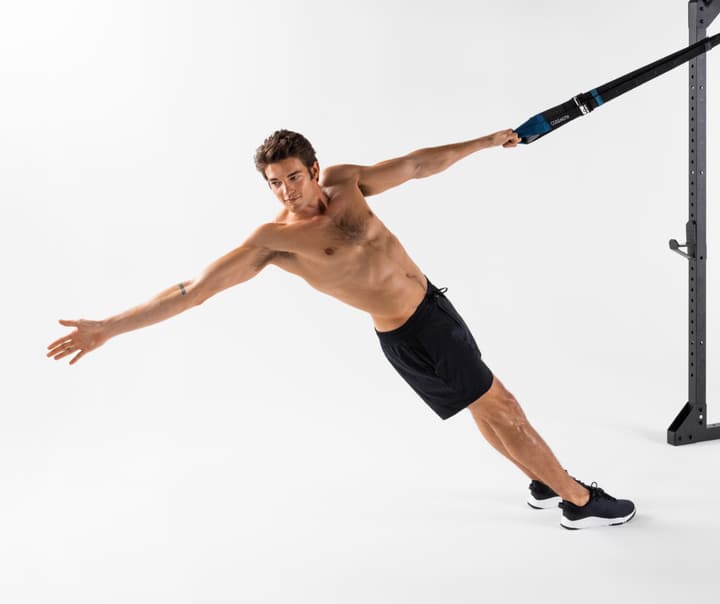 As muscular endurance improves, you'll be able to perform longer workouts while maintaining proper form.
Over time, this allows for even greater cardiovascular conditioning.
Suitable for All Fitness Levels
One of the greatest strengths of suspension training is accessibility.
Beginners can perform simple bodyweight movements using a more upright body position.
Intermediate users can increase difficulty by adjusting their angle.
Advanced athletes can perform explosive exercises, single-leg movements, and complex combinations that significantly challenge cardiovascular endurance.
This scalability allows nearly everyone to improve fitness at their own pace.
Building an Effective Cardio Suspension Workout
A cardio-focused suspension workout should emphasize continuous movement rather than maximum strength.
Alternating pushing, pulling, squatting, lunging, and core exercises keeps different muscle groups active while allowing brief recovery for individual muscles.
This approach enables the cardiovascular system to work consistently throughout the session.
Sessions lasting between 20 and 40 minutes often provide an excellent balance between strength development and cardiovascular conditioning.
Long-Term Benefits
When practiced consistently, suspension training offers long-term improvements beyond better cardio fitness.
Many people experience stronger muscles, improved posture, enhanced flexibility, better coordination, increased balance, and greater body awareness.
These improvements make everyday activities easier while supporting an active lifestyle.
Combined with proper nutrition and adequate recovery, suspension training can become an effective long-term fitness solution.
Common Mistakes to Avoid
Although suspension training is highly effective, several mistakes can reduce its cardiovascular benefits.
Taking long breaks between exercises allows heart rate to drop too much.
Performing movements too slowly without sufficient intensity limits cardiovascular demand.
Poor exercise selection may also reduce workout efficiency.
Choosing full-body compound exercises and maintaining steady movement creates a much more effective cardio session.
Focusing on proper form remains essential throughout every workout.
Final Thoughts
So, can suspension training improve cardio fitness? Absolutely. While many people think of suspension trainers as strength-training tools, they can also provide an excellent cardiovascular workout when used correctly.
By combining full-body movements, continuous exercise, minimal rest, and interval-based training, suspension workouts challenge both your muscles and your heart. They offer a practical solution for improving endurance, burning calories, and supporting overall health without relying solely on traditional cardio exercises.
Whether you're looking for a low-impact alternative to running, a time-efficient full-body workout, or a way to combine strength and cardio in one session, suspension training is a highly effective option. With consistency and progressive intensity, it can play a valuable role in improving cardiovascular fitness while building a stronger, more balanced body.