
You don't need a gym membership, expensive equipment, or an hour of free time to get an effective workout. A well-designed 20-minute HIIT session can challenge your cardiovascular system, work multiple muscle groups, and fit easily into a busy schedule. The key is knowing how to structure the workout so that you're working hard without turning every session into an exhausting experience.
If you've been wondering how to create a 20 minute HIIT workout at home, the good news is that the process is relatively simple. With the right exercises, work-to-rest ratio, and intensity, you can build a routine that is challenging, adaptable, and easy to repeat.
What Is HIIT?
High-intensity interval training, commonly known as HIIT, involves alternating periods of relatively intense exercise with short recovery periods. Instead of maintaining the same pace throughout an entire workout, you repeatedly increase your effort and then allow your body to recover before starting the next interval.

A HIIT workout can include bodyweight movements such as squats, mountain climbers, jumping jacks, lunges, and burpees. You can also use simple home equipment such as resistance bands, dumbbells, or a jump rope if you have them available.
The goal isn't necessarily to move as fast as possible throughout the entire workout. Good HIIT training is about controlling your intensity and maintaining good technique while working at a challenging level.
Why 20 Minutes Can Be Enough
One of the biggest advantages of a short HIIT workout is convenience. A 20-minute session is much easier to fit into a busy day than a traditional hour-long workout. That makes it easier to build a consistent exercise habit.
HIIT can also combine cardiovascular and muscular demands in the same session. For example, alternating squats with jumping jacks and push-ups can raise your heart rate while also challenging your legs, chest, shoulders, and core.
However, a 20-minute workout doesn't mean you should exercise at maximum intensity for all 20 minutes. Your body needs time to warm up, recover between intervals, and cool down afterward. The quality of your effort is more important than simply trying to make every second as difficult as possible.
How to Structure a 20-Minute HIIT Workout
Before deciding which exercises to use, divide your workout into different sections. A simple structure could include a five-minute warm-up, ten to twelve minutes of HIIT intervals, and a few minutes of easier movement at the end.
If you want the actual high-intensity portion to last longer, you can shorten the warm-up slightly, but don't skip it completely. Starting intense exercise with cold muscles can make the workout feel harder and may increase your risk of injury.
For beginners, a 20-minute session could consist of five minutes of warm-up followed by ten minutes of intervals and five minutes of easy movement and stretching. As your fitness improves, you can gradually increase the intensity or extend the work intervals.
Start With a Proper Warm-Up
The warm-up prepares your body for the more demanding part of the workout. It gradually increases your heart rate, raises your body temperature, and gets your joints and muscles moving.

You can begin with easy marching in place, followed by arm circles, bodyweight squats, alternating lunges, and gentle side-to-side movements. After a couple of minutes, gradually increase the pace.
The warm-up should feel comfortable rather than exhausting. You should finish it feeling ready to exercise, not tired before the main workout has even started.
Choose Exercises That Work Your Whole Body
When you're limited to 20 minutes, choose movements that provide a lot of training value. Full-body exercises are particularly useful because they allow you to work several muscle groups while keeping your heart rate elevated.
Bodyweight squats are an excellent starting point because they train the legs and hips. Push-ups can challenge the chest, shoulders, arms, and core. Mountain climbers combine core work with a cardiovascular challenge, while jumping jacks are an accessible way to increase your heart rate.
You can also include reverse lunges, high knees, skater steps, plank shoulder taps, or step-ups. The best exercises are those you can perform safely with good technique.
Build Your Work-to-Rest Ratio
The work-to-rest ratio is one of the most important parts of HIIT programming. It determines how long you exercise and how much recovery you receive before the next interval.
A beginner might start with 20 seconds of work followed by 40 seconds of recovery. This gives you enough time to catch your breath and prepare for the next movement.

Someone with more training experience might use 30 seconds of work followed by 30 seconds of recovery. More advanced exercisers may eventually use 40 seconds of work followed by 20 seconds of recovery.
There is no requirement to use the hardest ratio possible. If your technique falls apart during the final intervals, your work periods are probably too long or your recovery periods are too short.
Example of a Beginner 20-Minute HIIT Workout
A simple beginner session could start with five minutes of gentle movement. Spend about one minute marching in place, followed by bodyweight squats, alternating reverse lunges, arm circles, and easy jumping jacks.
For the main portion, choose four exercises: squats, incline push-ups, alternating reverse lunges, and marching mountain climbers. Perform each exercise for 30 seconds and then rest for 30 seconds. Repeat the circuit three times.
This gives you 12 minutes of interval work. Finish with three minutes of slow walking around your home and gentle mobility exercises.
This approach is much more manageable for a beginner than immediately attempting burpees, jump squats, and high knees at maximum intensity.
Example of an Intermediate 20-Minute HIIT Workout
If you've already been exercising regularly, you can increase the intensity while keeping the workout simple.
Start with a four-minute warm-up. Then perform 30 seconds of work followed by 30 seconds of recovery for four exercises: jumping squats, push-ups, mountain climbers, and alternating reverse lunges.
Repeat the circuit three times. If you still have time and energy, finish with a short final interval using high knees or fast step-ups.
Use the remaining time for a gradual cool-down. The goal should be to finish feeling challenged but still in control.
How to Make HIIT Harder Without Making It Longer
One of the biggest advantages of HIIT is that you don't necessarily need longer workouts as you become fitter. Instead, you can gradually increase the challenge.
You could perform more repetitions during the same work period, use a more demanding variation of an exercise, reduce your recovery time slightly, or increase the resistance if you're using equipment.
For example, you could progress from regular squats to squat jumps. You could move from incline push-ups to floor push-ups. You might also progress from marching mountain climbers to faster mountain climbers.
The important point is to make one change at a time. Increasing everything simultaneously can make recovery difficult and can negatively affect your technique.
Using Equipment for Home HIIT
Although you can create an effective HIIT workout with nothing but your bodyweight, equipment can add variety.
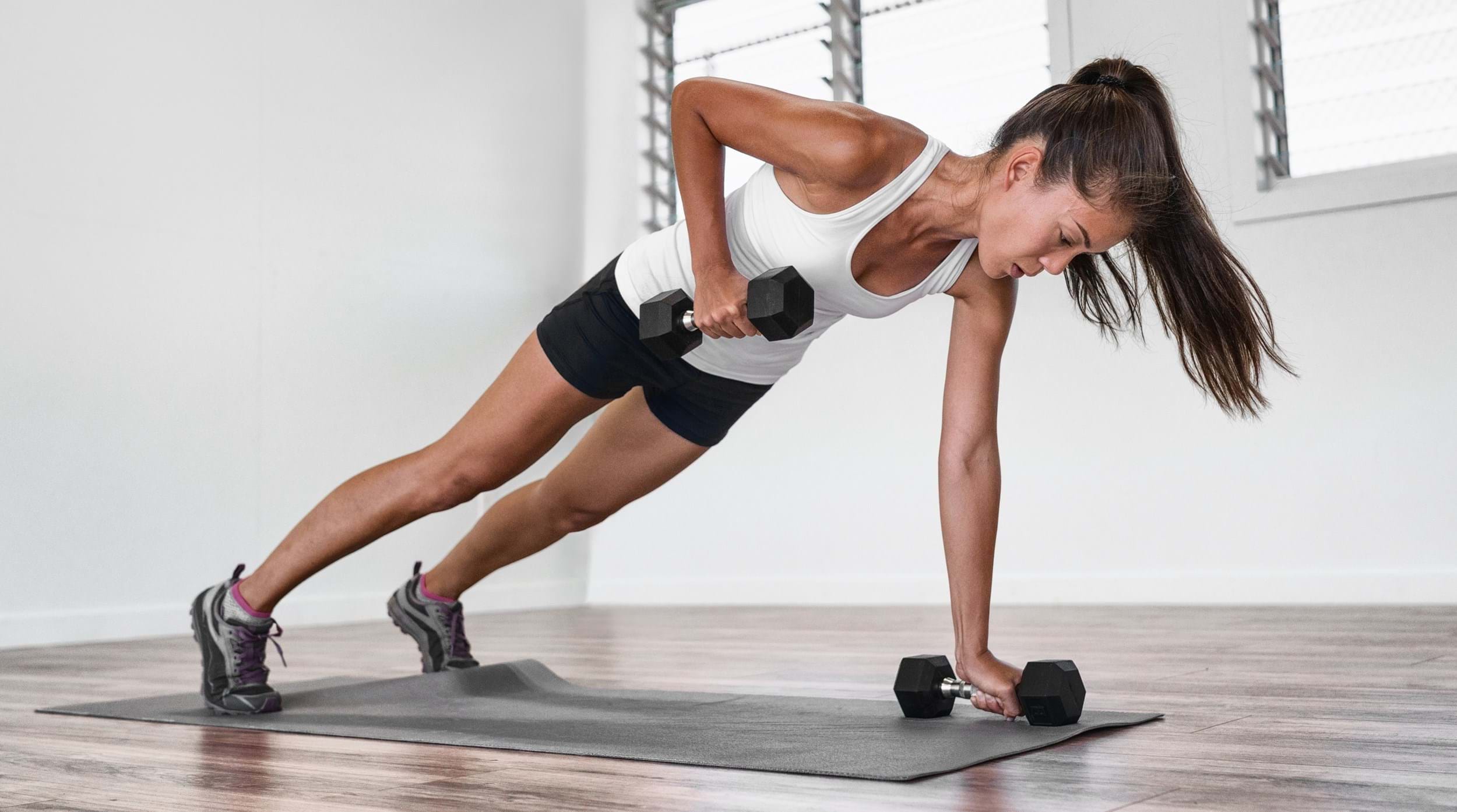
A jump rope can provide an intense cardiovascular challenge without requiring much space. Resistance bands can add resistance to squats, rows, presses, and other movements. A pair of dumbbells can also turn basic exercises into more challenging strength-and-conditioning movements.
You don't need a large home gym. A small selection of versatile equipment can be enough to give you plenty of exercise options.
Low-Impact HIIT for Beginners
HIIT doesn't have to involve jumping. If you have sensitive joints, live in an apartment, or simply prefer lower-impact training, you can still create a challenging workout.
Instead of jumping jacks, try stepping one foot at a time. Replace jump squats with regular squats performed at a quicker but controlled pace. High knees can become fast marching, while burpees can be modified by stepping the feet backward instead of jumping.
The goal is to elevate your heart rate and challenge your muscles, not to include as many jumps as possible.
How Often Should You Do a 20-Minute HIIT Workout?
Because HIIT can be demanding, you don't necessarily need to do it every day. For many people, two or three HIIT sessions per week can be plenty, particularly when combined with strength training and lower-intensity activities.
On other days, you could walk, cycle, perform mobility work, or complete a traditional strength workout. This variety gives your body different types of training while allowing heavily worked muscles to recover.
Recovery is part of the training process. If you're constantly exhausted or your performance is declining, adding more HIIT isn't necessarily the answer.
Common Mistakes to Avoid
One common mistake is treating every HIIT workout like a competition. Going all-out from the first interval can leave you exhausted halfway through the session and make it difficult to maintain proper form.
Another mistake is choosing exercises that are too complicated. When you're tired, complex movements become harder to perform correctly. Simple exercises often work better because you can focus on intensity and technique.
Skipping the warm-up is another mistake. Even though the workout is only 20 minutes, your body still benefits from gradually preparing for exercise.
Finally, don't judge the effectiveness of your workout solely by how exhausted you feel afterward. A successful session is one that challenges you appropriately while allowing you to recover and train again.
How to Progress Over Time
Once your 20-minute workout starts feeling easier, you can gradually increase the challenge. Start by improving your technique and consistency. Then consider adding repetitions, increasing resistance, changing exercise variations, or adjusting the work-to-rest ratio.
You can also track your workouts. Write down the exercises you performed, the number of repetitions, and how difficult the session felt. After several weeks, you'll have a clear record of your progress.
Remember that progress isn't always about doing more. If you can perform the same workout with better technique, less fatigue, or greater control, that's also an improvement.
Make Your 20 Minutes Count
Learning how to create a 20 minute HIIT workout at home doesn't require complicated programming. Start with a proper warm-up, choose a handful of full-body movements, establish a realistic work-to-rest ratio, and adjust the difficulty to match your fitness level.
The best HIIT routine is one you can perform safely and consistently. You don't need to finish every session completely exhausted. You simply need to provide your body with an appropriate challenge and give it enough recovery to adapt.
With just 20 minutes, a little space, and a consistent approach, you can build an effective home workout routine that supports cardiovascular fitness, muscular endurance, and overall health.